Become better at
decisions 🎓

Learn how to improve the quality of product and service decisions before your team spends months building the wrong thing.

Apply for the pilot
The pilot cohort starts once 8–10 participants are confirmed.
The target is Autumn 2026.
Commitment
12 hours
Project
Your own
Max attendees
10
Starts once slots filled
~ Nov 2026

About this program

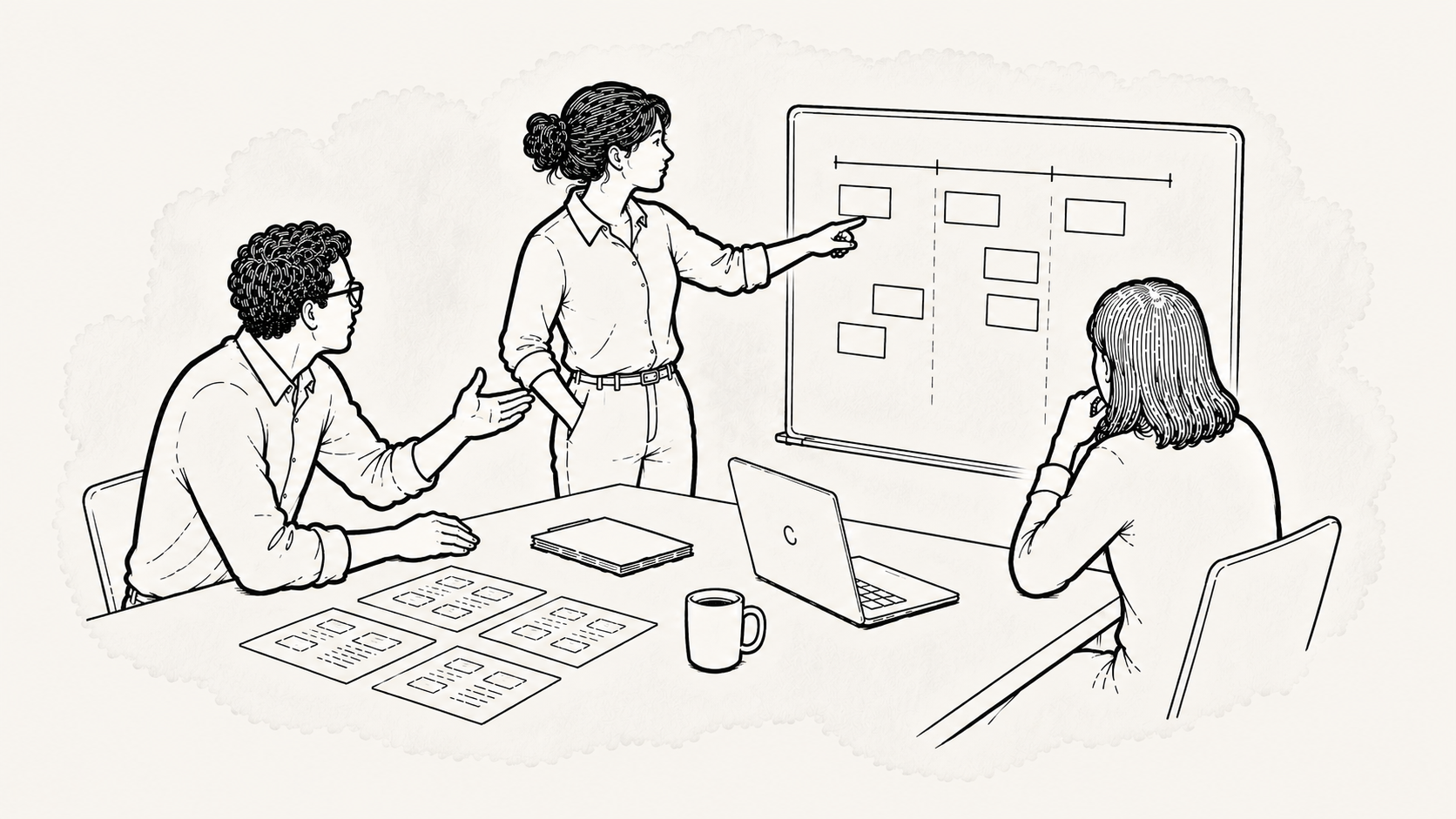
Decision Lab is a guided decision-making program. Bring one real product, service, or digital initiative from your work. Over three sessions, you’ll identify what you don’t know, collect the evidence that matters, and leave with a clear recommendation for what to do next.

Rather than working on fictional exercises, every participant works on a real initiative from their organization.

Skills you’ll gain

Framing organizational decisions
Turning uncertainty into evidence
Aligning stakeholders around decisions

This program is for you if ...

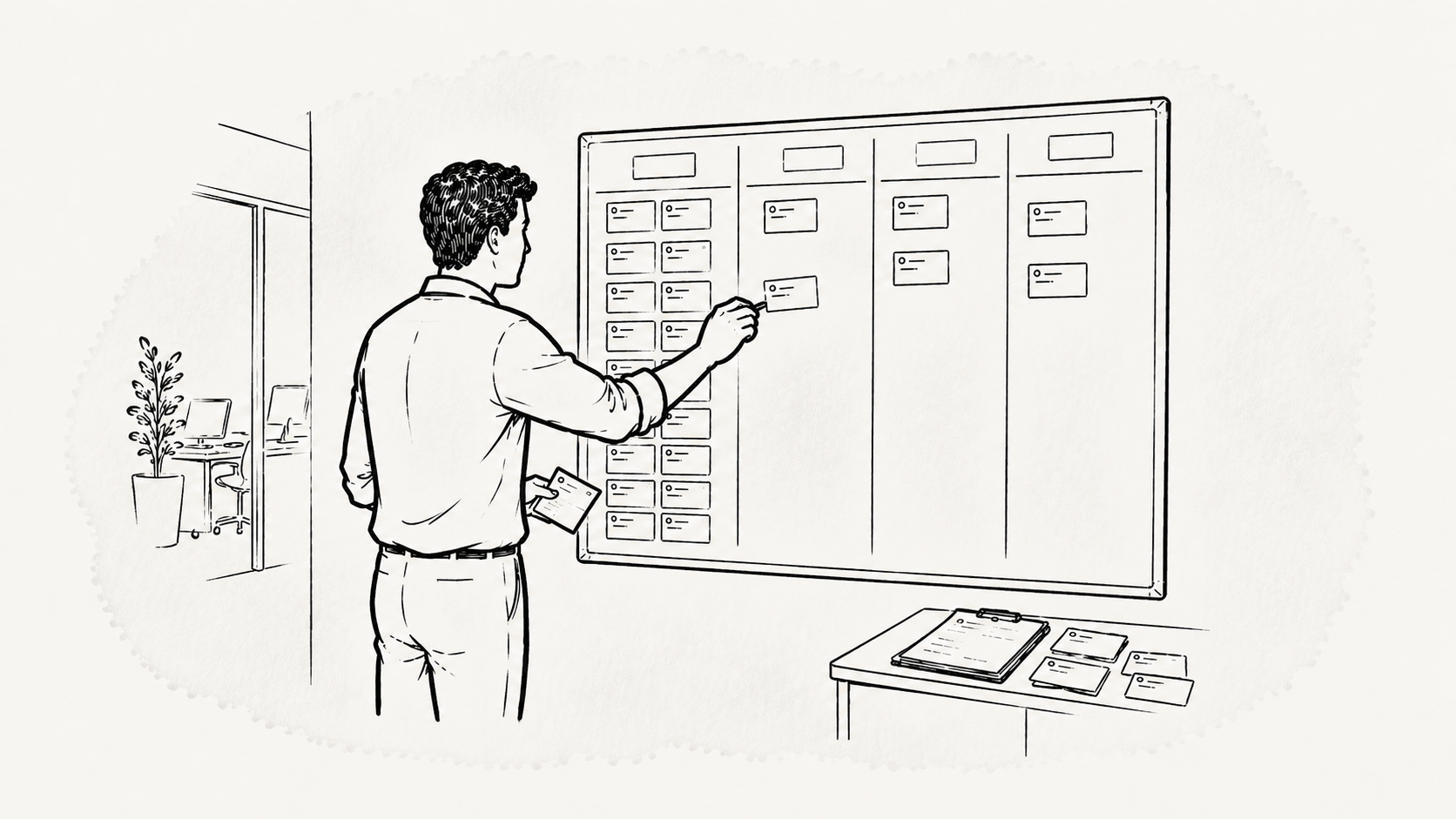
Your team can’t agree what matters

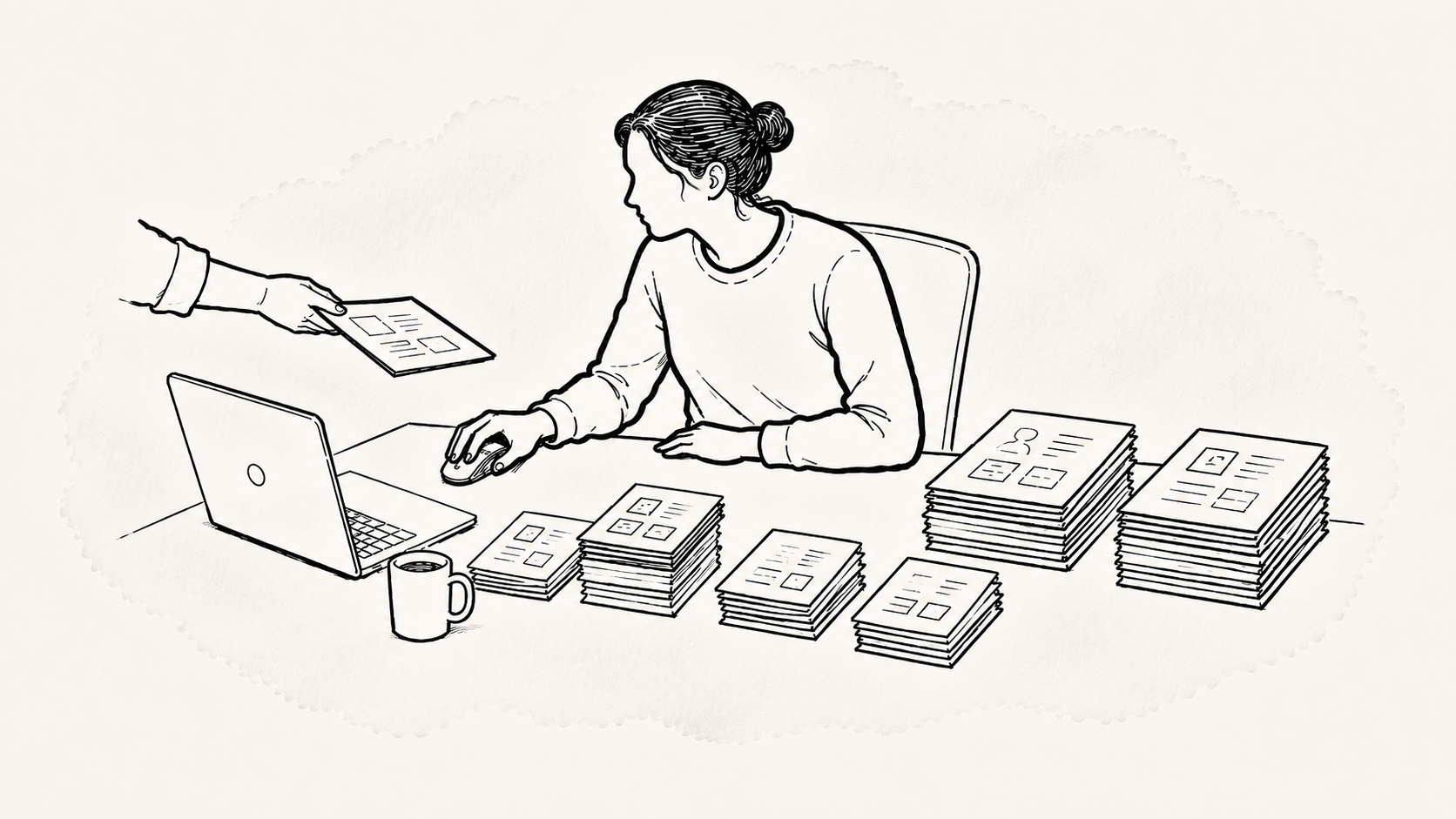
Your backlog keeps growing

Research isn’t changing decisions

AI generates ideas faster than your team can evaluate them

Stakeholders keep pulling in different directions

Nobody remembers why past decisions were made

How this program works.

Throughout the program, we’ll work on your own initiative.
You bring a product idea, AI initiative, service redesign, internal process, or transformation project.

Structure

3 weeks · 4h per week · Your project · Teaching · Individual work ·
Group critiques · Discussions
Before the course

Preparation

Submit initiative
Submit your initiative – decisions to make, why they matter, current status, key stakeholders, biggest uncertainties. Some examples: automating a process, redesigning onboarding, replacing a CRM, building a feature, entering a new market.
Preparation call (30 min)
We'll do a brief review of your initiative and clarify your expectations.
Week 1 · 4 hours

Understanding the decision

Module 1 · Why smart teams build the wrong thing
Assumptions masquerading as facts · Stakeholder disagreement · Politics · Cognitive biases · False certainty
Module 2 · Making assumptions visible
Problem framing · Outcomes vs Solutions · Systems thinking · Employee experience, Systems thinking · Service ecosystem
Module 3 · Framing the decision
Decision Case · Desired outcomes · Confidence · Assumptions · Stakeholders · Communicating uncertainty · Handling disagreement · Explaining evidence
One week in between
Independent work. Collect the evidence.
Week 2 · 4 hours

Reducing uncertainty

Module 4 · Building confidence
Assumptions mapping · Interview design · Observations · Service blueprints · Usability · Behavioral evidence · Analytics · AI-assisted research synthesis
Module 5 · Finding hidden assumptions
Business models · Implementation models · Mental models · Uncovering mismatches with user and customer expectations
Module 6 · Designing experiments
Qualitative experiments · Quantitative experiments · Defining the smallest experiment that changes confidence
One week in between
Independent work. Launch experiment.
Week 3 · 4 hours

Committing with confidence

Module 7 · Making grounded recommendations
Evidence review · Remaining risks · Executive alignment · Confidence · Tradeoffs · Recommendations · Decision frameworks
Module 8 · Roadmap to the next decision
AI as decision support · Tracking confidence · Calibrating scope · Just enough clarity to make the next step
One month in between
Independent work. Make a decision.
One month later

Follow-up

90-minute reunion
What happened? · Scaling clarity to other initiatives

By the end of the program, you’ll leave with
a structured Decision Case that you can share with your team and revisit as new evidence emerges

clearer problem definition
assumptions worth testing
evidence still missing
experiments worth running
recommendations you can take back to your team
Apply for the pilot
The pilot cohort starts once 8–10 participants are confirmed.
The target is Autumn 2026.

Meet the facilitator

I'm Raitis Linde, MSc IT, MBA, with 13+ years of experience building and scaling B2B and B2C platforms across fintech, telecom, insurance, healthcare, and SaaS.

Teams I've collaborated with:

Examples of deliveries: Improved team activation +10% for a global productivity software vendor; MVP for an Internet-of-Things portal to a regional telecom operator; Mobile platform for risk engineers to a Fortune 500 global insurer; 700 trained employees in Design and Product thinking in retail, telecom, software development, public sector, and more.

Frequently Asked Questions

What kind of challenge should I bring?
Bring one initiative where your team still has important decisions to make.
It could be:
· a new product or service
· an AI initiative
· a digital transformation project
· an internal process
· a customer experience improvement
· a new feature or platform
The only requirement is that the outcome isn’t predetermined. The course is designed to help you make better decisions before committing significant time, money, and organizational effort.
Examples from previous work include:
· Increasing activation for a SaaS product by 10%
· Validating demand for an IoT platform
· Replacing legacy CRM systems with Salesforce
· Moving customers from support to self-service
· Improving service termination experience
· Defining an MVP for a mobile inspection tool
· Deciding how to invest in a design system
· Creating company-wide product quality principles
· Consolidating authentication across multiple products
How is this different from attending a conference?
Conferences are great for discovering new ideas, hearing case studies, and meeting people. This Decision Lab is different. You won’t spend three days listening to speakers. You’ll spend three weeks working on one important decision from your own organization. Between sessions you’ll collect evidence, challenge assumptions, and return with new insights. Throughout the lab you’ll receive feedback and critique from me and the group.
The goal isn’t to leave inspired.
It’s to leave with a substantially stronger decision.
Is this a UX or service design course?
No. The methods draw from product development, user research, service design, behavioral science, systems thinking, and strategy—but the course isn’t about becoming better at any one discipline. It’s about learning how to make better organizational decisions before investing in implementation.
Whether you’re a product manager, designer, founder, service owner, innovation lead, or public-sector professional, the focus stays the same:
What do we need to learn before we build?
Who is this course for?
This course is intended for people responsible for making professional judgements under uncertainty, improving products, services, or internal processes, including:
· Product Managers
· Service Owners
· Designers
· Researchers
· Engineering Managers
· Innovation Leads
· Public-sector professionals
· Founders
· Team Leads
You don’t need previous UX experience.
What will I leave with after the course?
You’ll leave with work that is directly applicable to your organization, including:
· a clearer problem definition
· the assumptions that matter most
· evidence collected during the course
· a prioritized experiment plan
· recommendations for your next decision
What if I don’t have a project?
You’ll get the most value if you bring a real initiative. If you don’t currently have one, we’ll provide realistic scenarios you can work on together with other participants.
How much time should I expect between sessions?
Expect approximately
· 4 hours of live sessions each week
· 2–4 hours of work between sessions
Most of the learning happens while applying the ideas in your own organization.
Will I receive feedback?
Yes. Teams working on the same initiative often gain even more value because they develop shared understanding and make decisions together.
What if my project is confidential?
Participants are welcome to anonymize sensitive information.
The methods work just as well without revealing confidential business details.
Why only 10 participants?
The group is intentionally small. This isn’t lecture-based training. Every participant receives feedback, presents work, and discusses a real organizational challenge. Keeping the cohort small allows everyone to actively participate.
Why do you call it a Decision Lab?
Because organizations rarely fail from a lack of ideas. They fail to commit to ideas before they’ve gathered enough evidence. This lab is designed to help you slow down just enough to make the next important decision with greater confidence. That’s what participants work on throughout the three weeks.
How do I know if this is the right time to join?
This Decision Lab is most valuable if your team is about to make an important decision—not after it’s already been made. If you’re asking questions like:
· “Are we solving the right problem?”
· “Should we build this at all?”
· “Do we have enough evidence to move forward?”
· “How do we align stakeholders who disagree?”
· “What should we learn before investing more?”
... then you’re exactly at the stage this lab is designed for.
What if I have an urgent decision to make?
I also offer different collaboration formats, from 90-minute to 12-hour sessions. Choose what works best for your needs, and let's book a 25-minute call.

All right, you can be done scrolling.

If you’re still wondering why this course, I can say this:

I’ve spent my career watching organizations debate the wrong questions. "Should we redesign?", "Should we digitize this?", "Should we build AI?". Rarely was that the real problem. The real problem was deciding what was worth building in the first place. This course is how I work with teams. Bring a real initiative. We’ll work on it together. You’ll leave with a clearer decision, not more slides.

Apply for the pilot
The pilot cohort starts once 8–10 participants are confirmed.
The target is Autumn 2026.