Risk Engineering Notebook
Redesigning enterprise risk assessment workflows for a Fortune Global 500 insurer
Context
A global insurance company approached our team to modernize how 1,300+ risk engineers conducted on-site risk assessments. At the time, the workflow relied on macro-enabled Excel spreadsheets, multiple disconnected backend systems, manual note-taking, and post-visit documentation and asynchronous coordination between risk engineers. Risk reports took days to consolidate after a site visit, information was fragmented, and customers lacked transparency during the process. The opportunity was not just digitalization, but rethinking the end-to-end workflow using mobile technology. I was leading user experience direction, conducting research synthesis across nearly 20 field interviews, consolidating fragmented workflows into a unified user journey, and translating complex risk grading logic into usable interfaces.
The Problem
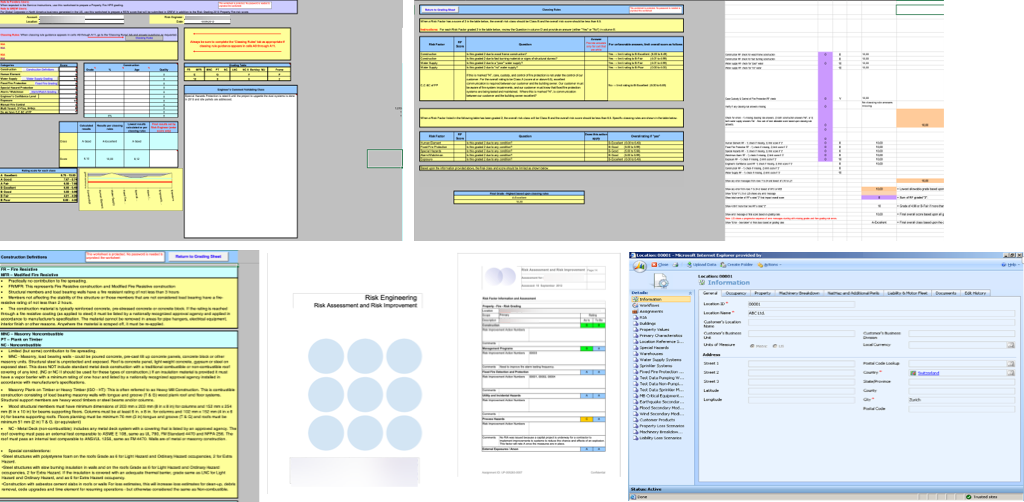
Risk Engineers operated in a highly complex, regulated environment involving technical infrastructure assessment, fire protection systems, construction risk grading, multiple backend systems and report generation for underwriters and clients.
The workflow involved generating data on-site, consolidating notes later, calculating grading in spreadsheets, reports prepared days after visit and back-and-forth clarification with customers.
The system was optimized for documentation, not for decision clarity.
Research & Insight
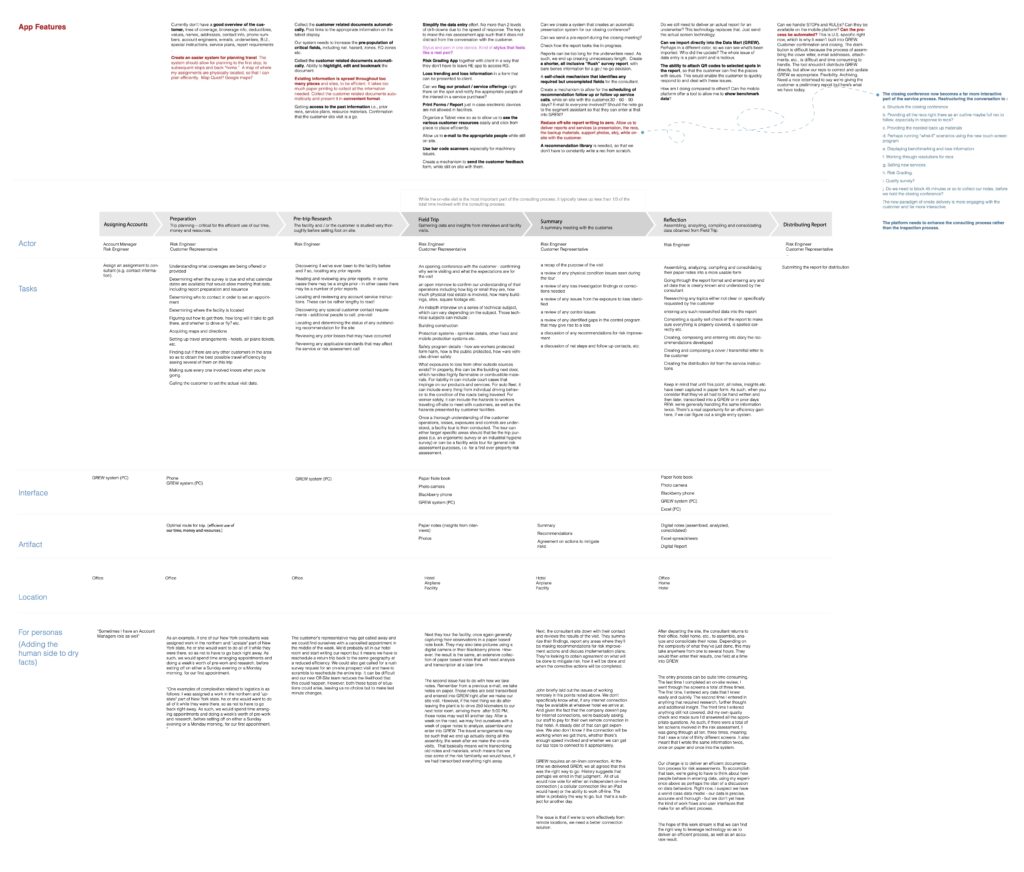
We began with desk research to map the existing toolset, then conducted 18 field interviews. Key findings included documentation friction consuming significant time, customers wanting more transparency during visits, cognitively heavy risk grading logic, and off-site reporting being the biggest bottleneck.
Risk engineers did not want more software. They wanted continuity with how they already worked, pen, paper, and camera, but structured.
Approach
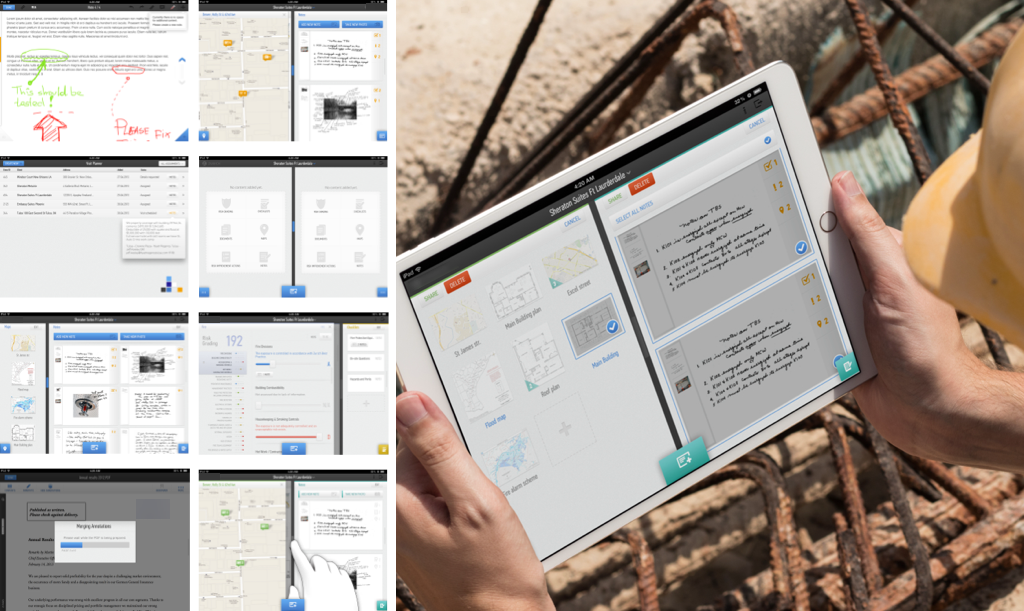
Instead of replicating spreadsheets on an iPad, we restructured the entire workflow around on-site issue capture, collaborative grading, structured yet flexible note-taking, immediate draft output, and backend integration as invisible infrastructure. Our goal was to reduce off-site evaluation effort and move clarity forward into the visit itself.
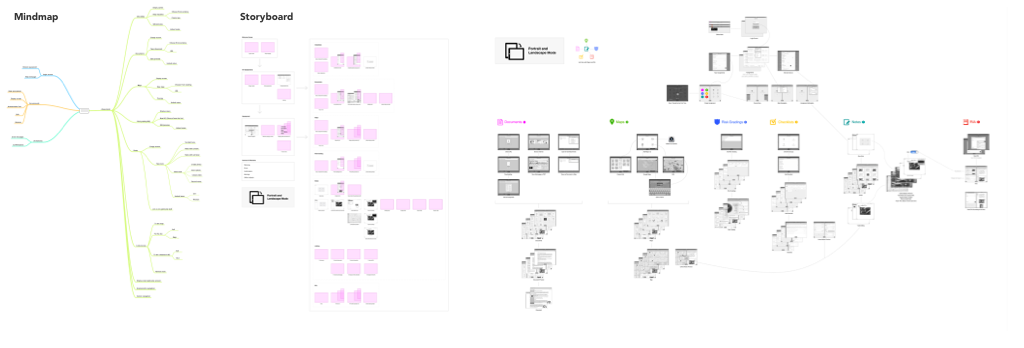
We synthesised research into a clear on-site journey model that became the foundation for product decisions. We prototyped solutions where engineers could work in parallel – notes, grading, documentation, without blocking each other. To reduce cognitive switching and match real working behaviour, we introduced a split-screen interaction paradigm.
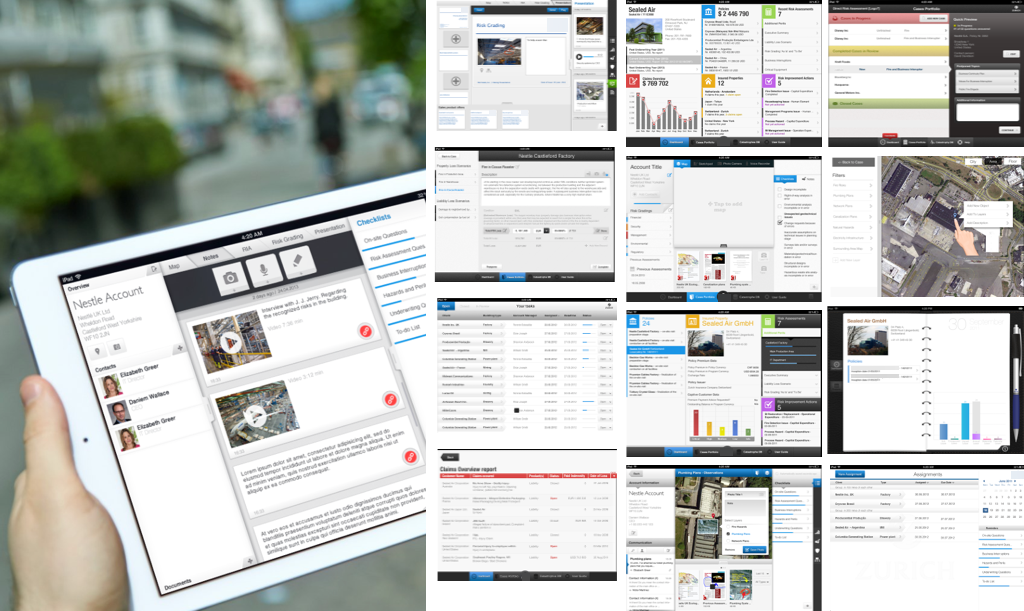
Presentation-ready summaries enabled engineers to show preliminary results before leaving the customer location. Graphical risk grading interface translated complex scoring logic into understandable visual states. Most importantly, we integrated multiple legacy systems behind a unified interface.
Outcome
As a result, the system was eventually deployed to 1300+ risk engineers and 2600+ iPads. The system reduced the time to complete risk reports by 4 days and site inspections by 1 hour per visit. Overall, the customer collaboration was improved during on-site visits, with customers completing all improvement actions 82% faster than previously. The system also had a significant effect by improving the net promoter score by 10%, and was later scaled into additional enterprise processes, including claims handling, and highlighted in Apple's enterprise success stories for productivity transformations within the Apple ecosystem.
This project shaped how I approach enterprise product work: start with real workflows, reduce friction, and make complexity feel manageable.